17
Website Status Checker: Complete Guide to Checking Website Uptime and Availability
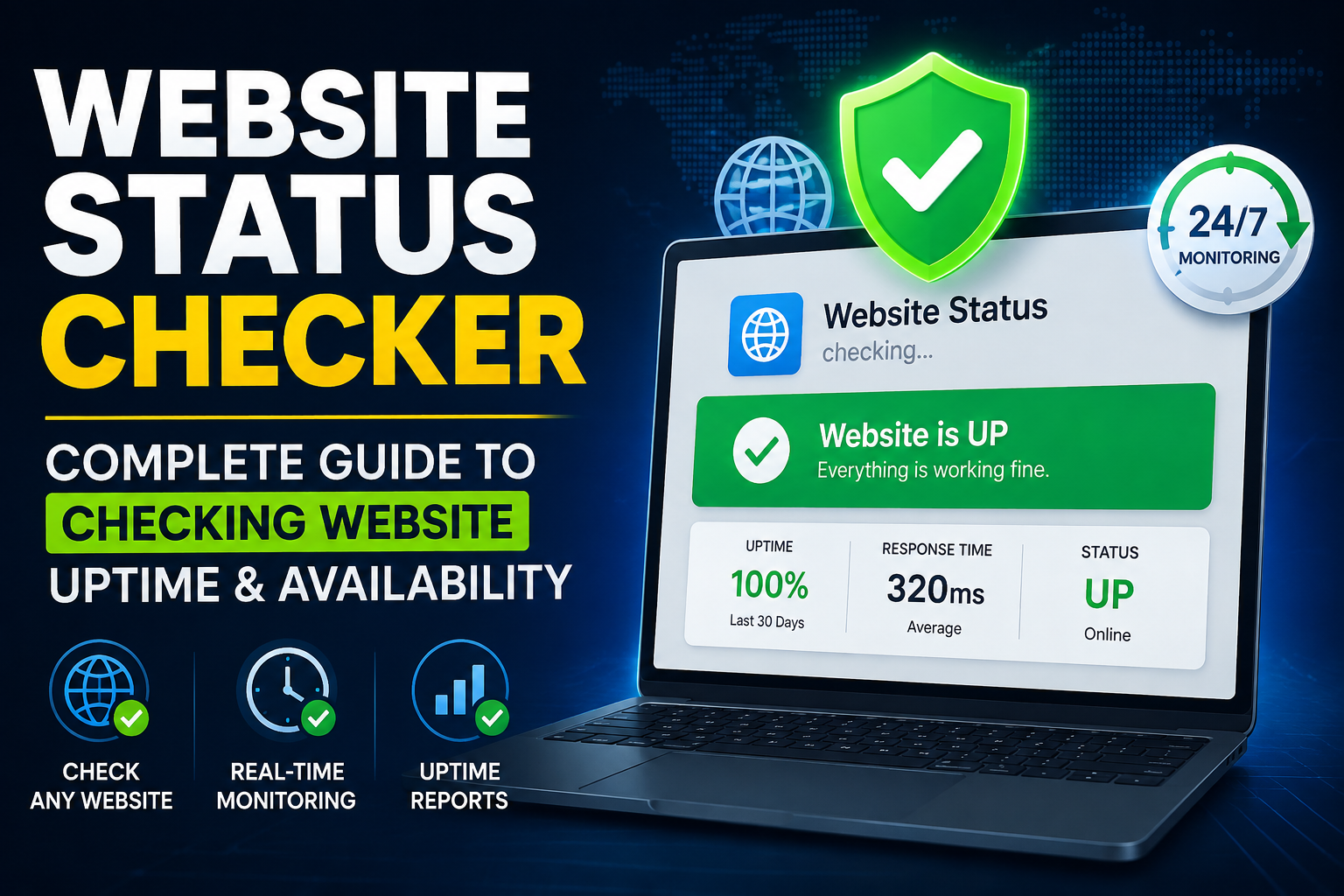
A **Website Status Checker** is an online tool that quickly checks whether a website is online, offline, or experiencing errors. It provides useful details such as HTTP status codes, server response, redirects, and response time, making it helpful for website owners, developers, SEO professionals, and users troubleshooting website availability issues.
In today’s digital world, website availability is extremely important for businesses, bloggers, developers, online stores, and website owners. When a website goes offline, users may not be able to access important pages, products, services, or information. Even a short period of downtime can affect user experience, sales, search engine visibility, and online reputation.
A Website Status Checker is a useful online tool that helps you quickly determine whether a website is online, offline, or experiencing connectivity issues. It can check the website’s response, HTTP status code, server availability, and other basic technical information.
Whether you are a website owner, SEO professional, developer, or simply trying to find out whether a website is down, a Website Status Checker can provide useful information within seconds.
What Is a Website Status Checker?
A Website Status Checker is an online tool designed to check the current availability and status of a website. You simply enter a website URL, and the tool analyzes the website connection to determine whether the server is responding.
Depending on the tool, the results may include information such as:
- Website online or offline status
- HTTP status code
- Server response
- Response time
- Website availability
- Redirect information
- Connection errors
- Basic server information
For example, if you are unable to open a website in your browser, you can use a Website Status Checker to determine whether the problem is with the website itself or your own internet connection.
How Does a Website Status Checker Work?
A Website Status Checker generally sends a request to the specified website or server. The server responds with an HTTP status code and other connection information.
The tool analyzes this response and displays the result in an easy-to-understand format.
Common HTTP status codes include:
200 OK
A 200 status code generally means that the website or requested page is responding successfully. This usually indicates that the page is available.
301 Moved Permanently
A 301 redirect means that the requested URL has been permanently redirected to another URL. Redirects are commonly used when websites change their domain structure or page URLs.
302 Found
A 302 status code indicates a temporary redirect. The requested URL is temporarily pointing users to another location.
403 Forbidden
A 403 status code means that the server understands the request but refuses to provide access to the requested resource.
404 Not Found
A 404 status code means that the requested page could not be found on the server.
500 Internal Server Error
A 500 status code generally indicates an internal server-side problem. The website server encountered an unexpected condition that prevented it from completing the request.
By checking these responses, a Website Status Checker can help users understand what is happening with a website.
Why Is Website Status Important?
Website uptime is essential for maintaining a reliable online presence. Visitors expect websites to load when they click a link or enter a URL.
If a website frequently becomes unavailable, it can create several problems.
1. Better User Experience
Visitors expect a website to be accessible whenever they need it. Frequent downtime can frustrate users and may cause them to leave the website.
2. Protect Online Revenue
For e-commerce websites and online businesses, downtime can directly affect sales. If customers cannot access product pages or checkout pages, potential purchases may be lost.
3. SEO Performance
Search engines need to access your website to crawl and understand its content. Repeated or prolonged downtime can potentially affect how search engines interact with your website.
4. Brand Reputation
A website that regularly becomes unavailable may appear unreliable to visitors. Maintaining good website availability helps create a more professional online presence.
5. Faster Troubleshooting
A Website Status Checker can provide an initial indication of whether a website is responding. This can help website owners begin troubleshooting technical problems more efficiently.
How to Use a Website Status Checker
Using a Website Status Checker is usually very simple and does not require technical knowledge.
Step 1: Open the Website Status Checker
Visit the Website Status Checker tool on your website.
Step 2: Enter the Website URL
Enter the complete website address you want to check, such as:
https://example.com
Step 3: Start the Check
Click the check or submit button to begin analyzing the website.
Step 4: Review the Results
The tool will display the available website status information. Depending on the tool, you may see the website's status, HTTP response code, response time, or other technical details.
Step 5: Understand the Result
If the website is responding normally, the result will generally indicate that the website is online. If the server cannot be reached or returns an error, the tool can help identify that the website may be experiencing an issue.
Website Status Checker vs Website Uptime Monitor
Although these tools are related, they are not exactly the same.
A Website Status Checker is generally used to perform an immediate check. You enter a URL and receive its current status.
A Website Uptime Monitor, on the other hand, continuously checks a website at regular intervals and records its availability over time.
For example:
- Website Status Checker = Check the website right now
- Uptime Monitor = Monitor the website continuously
- Status Checker = Immediate troubleshooting
- Uptime Monitor = Long-term availability tracking
Both tools can be useful depending on your requirements.
What Is Website Uptime?
Website uptime refers to the amount of time a website remains accessible and available to visitors.
For example, if a website is available almost all the time, it has high uptime. If the server frequently becomes unavailable, its uptime is lower.
Website owners generally aim for very high availability because downtime can affect visitors and business operations.
Uptime is often represented as a percentage. A higher percentage indicates better availability.
What Causes Website Downtime?
There are many possible reasons why a website may become unavailable.
Server Problems
Hosting servers can experience hardware, software, or configuration problems that cause websites to become temporarily unavailable.
Hosting Maintenance
Scheduled maintenance can sometimes require a website or server to be temporarily taken offline.
DNS Problems
DNS configuration issues can prevent a domain from correctly connecting visitors to the appropriate server.
Domain Issues
An expired domain or incorrect domain configuration can make a website inaccessible.
Traffic Spikes
A sudden increase in visitors can place significant load on a server. If the hosting environment cannot handle the traffic, the website may become slow or unavailable.
Software Errors
Website applications, plugins, themes, scripts, or server software can sometimes cause unexpected errors.
Network Problems
Connectivity problems between users and servers can also affect website accessibility.
Website Status Checker for SEO
Website availability is an important technical consideration for SEO. Search engines need to access your website in order to crawl its pages and understand its content.
A Website Status Checker can be useful during SEO troubleshooting because it can help identify HTTP responses and accessibility problems.
SEO professionals can use status checking tools to investigate:
- Website availability
- HTTP response codes
- Redirects
- Server errors
- Broken pages
- Unexpected responses
- Website accessibility
For example, a page returning a 404 response may require investigation if it is an important page that should be available to visitors and search engines.
Similarly, unexpected redirect chains or server errors can indicate technical issues that may need attention.
Website Status Checker for Developers
Developers can use a Website Status Checker as a quick diagnostic tool when working on websites and web applications.
When deploying a new website or making server changes, developers may want to verify that the website is responding correctly.
A status checker can be useful for:
- Testing website deployments
- Checking HTTP responses
- Troubleshooting server issues
- Verifying redirects
- Checking API endpoints
- Investigating connectivity problems
- Confirming website availability
It provides a convenient first step before performing more advanced server-side troubleshooting.
Website Status Checker for Website Owners
Website owners do not always need advanced technical knowledge to benefit from a status checker.
If a visitor reports that your website is not working, you can use the tool to perform a quick external check.
For example, if the website is responding normally through the status checker but you cannot access it from your device, the problem may be related to your local network, DNS cache, browser, or internet connection.
If the status checker also reports that the website is unavailable, there may be a server, hosting, DNS, or website configuration issue that requires further investigation.
Common Website Status Problems
A Website Status Checker can help identify several common problems.
Website Is Offline
The server may not be responding to requests. This could be caused by server downtime, hosting problems, network issues, or configuration errors.
Website Returns 404
The requested page does not exist at the specified URL. Check the URL and confirm whether the page has been removed or moved.
Website Returns 403
The server is refusing access. This can happen because of permissions, security rules, IP restrictions, or server configuration.
Website Returns 500
An internal server problem is preventing the request from being completed. Website owners may need to check server logs or application errors.
Website Redirects Unexpectedly
Unexpected redirects may be caused by incorrect website configuration, plugins, server rules, or URL changes.
Benefits of Using an Online Website Status Checker
There are several advantages to using an online status checker.
Fast Results
You can check a website within seconds without installing additional software.
Easy to Use
Most online status checkers require only a website URL.
Useful for Troubleshooting
The results can provide an initial indication of whether the website is responding correctly.
Helpful for SEO
HTTP status information can help SEO professionals investigate technical website issues.
Useful for Developers
Developers can quickly verify website responses after making changes.
Accessible From Anywhere
Because it is an online tool, you can use it from different devices and locations with an internet connection.
Website Status Checker Best Practices
For the most useful results, always enter the correct website URL. If you are checking a specific page, enter the complete page address rather than only the domain.
It is also useful to understand the difference between a website being completely offline and a specific page returning an error. A website can be online while one particular page returns a 404 or 500 response.
When troubleshooting, check important URLs individually and compare the results.
If a website is unavailable, consider checking it again after a short period to determine whether the problem is temporary or persistent.
Frequently Asked Questions
What is a Website Status Checker?
A Website Status Checker is an online tool that checks whether a website is responding and provides information about its current HTTP response and availability.
How do I check if a website is down?
Enter the website URL into a Website Status Checker. The tool can determine whether the website is responding and may display its HTTP status code and other information.
Can a Website Status Checker detect server errors?
Yes. Depending on the tool, it can identify HTTP responses such as 403, 404, and 500, which can help indicate different types of website problems.
Is a Website Status Checker useful for SEO?
Yes. SEO professionals can use status checking tools to investigate HTTP responses, redirects, server errors, and website accessibility.
Can I check any website?
Generally, you can enter a publicly accessible website URL and check whether it responds to an external request. The exact information available depends on the website and the capabilities of the checker.
What does HTTP 200 mean?
HTTP 200 generally indicates that the server successfully processed the request and returned the requested resource.
What does HTTP 404 mean?
HTTP 404 generally means that the requested resource could not be found on the server.
What does HTTP 500 mean?
HTTP 500 generally indicates an internal server error that prevented the server from successfully completing the request.
Conclusion
A Website Status Checker is a useful online tool for quickly checking website availability, HTTP responses, and basic connection status. Whether you are a website owner, SEO professional, developer, blogger, or regular internet user, it can help you understand whether a website is responding normally or experiencing an issue.
Regularly checking important websites can make troubleshooting easier and help identify availability problems. Combined with proper website monitoring, reliable hosting, DNS management, and technical maintenance, a Website Status Checker can be a valuable part of maintaining a healthy online presence.
If you need a quick way to determine whether a website is online, offline, or returning an unexpected response, a Website Status Checker provides a simple and convenient solution.
Contact
Missing something?
Feel free to request missing tools or give some feedback using our contact form.
Contact Us