
Ask ten different financial experts how much you should save for emergencies, and you’ll likely get ten different answers. Some will confidently state “three to six months of expenses” as if it’s a universal law written in stone. Others might suggest a flat dollar amount like $10,000 or $20,000. A few might even tell you that saving too much is actually a mistake because that money could be invested instead.How Much Money Do You Really Need?
The confusion is understandable. Emergency fund advice has been passed around for decades, often without much thought to how dramatically life has changed. The three-month rule originated in a different economic era—one with pensions, lower housing costs, and jobs that people kept for thirty years. Today’s workforce faces gig economy uncertainty, healthcare deductibles that can wipe out a year of savings, and housing costs that consume half of many household budgets.
So let’s cut through the conflicting advice and determine what actually makes sense for your specific situation. The answer might surprise you.
Why Emergency Funds Exist in the First Place
Before calculating numbers, it helps to understand the true purpose of an emergency fund. This isn’t just another savings account or a rainy day fund for minor inconveniences. An emergency fund serves one specific function: it prevents financial disaster when life throws something expensive and unexpected at you.
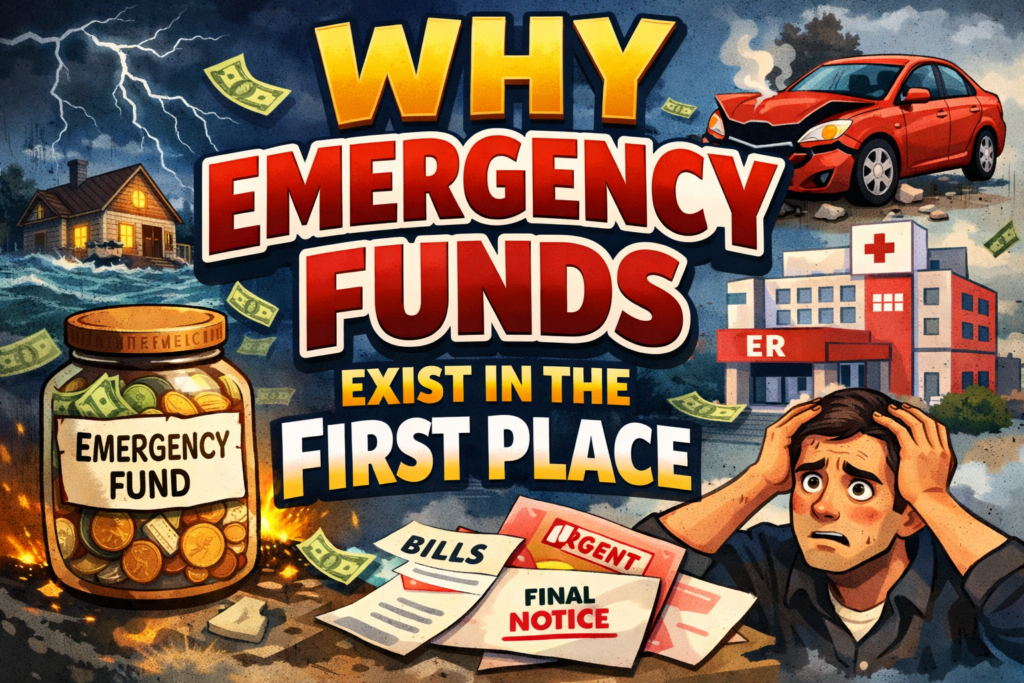
Think about what happens without one. The car breaks down—a $1,200 repair. Without savings, that repair goes on a credit card. If you carry that balance for a year at 22% interest, you’ll pay an extra $264. Not devastating, but painful. Now imagine a bigger crisis. You lose your job and can’t find work for four months. Rent, food, insurance, and minimum loan payments total $3,500 monthly. Without savings, you’re looking at $14,000 in credit card debt at crushing interest rates. That’s the kind of hole that takes years to dig out of.
The emergency fund exists to keep small problems from becoming catastrophic ones. It buys time. It provides options. It lets you make decisions from a position of strength rather than desperation.
This understanding matters because it shapes how much you actually need. Too little and you’re still vulnerable. Too much and you’re hoarding cash that could be working harder elsewhere. The sweet spot sits right where you have enough to handle realistic worst-case scenarios without going overboard.
The Classic Three to Six Month Rule—Examined
The standard advice says save three to six months of living expenses. This guideline has stuck around because it works reasonably well for many people. But it’s worth understanding where those numbers came from.
Three months historically represented the average time it took a skilled worker to find a new job during normal economic times. Six months accounted for recessions or specialized fields where jobs were scarce. The range gave people flexibility based on their personal risk factors.
But here’s what the rule doesn’t tell you: it refers to essential expenses only, not your full paycheck. If you earn $5,000 monthly but spend only $3,500 on necessities, your target is $10,500 to $21,000, not $15,000 to $30,000. That distinction matters because it makes the goal more achievable.
The rule also assumes you have other protections in place—unemployment insurance, health insurance, maybe some family support. For people without those safety nets, three months might be dangerously inadequate.
So the classic rule remains useful as a starting point, but your actual number depends on factors that the rule doesn’t consider.
Breaking Down Your True Essential Expenses
To calculate your real emergency fund target, you need to know exactly what you’d need to survive if your income stopped tomorrow. This isn’t your normal budget with restaurants, streaming services, and gym memberships. This is bare-bones survival mode.
Start with housing. Rent or mortgage comes first. If you own a home, include property taxes and insurance. Don’t forget utilities—electricity, water, gas, internet (essential for job searching), and a basic phone plan.
Food comes next. Groceries for you and your dependents. Not restaurant meals, not delivery, not fancy ingredients. Just nutritious food to keep everyone healthy.
Transportation matters too. If you own a car, include your payment, insurance, and enough fuel for essential travel and job interviews. If you use public transit, budget for passes.
Insurance premiums stay in the budget. Health, dental, vision, and any other coverage you’d keep. Dropping insurance during a crisis is tempting but incredibly risky.
Minimum debt payments must continue. Student loans, credit card minimums, personal loans—missing these destroys your credit exactly when you need it most.
Finally, include essential healthcare. Prescriptions, necessary doctor visits, and co-pays. Skip the elective procedures and routine checkups if necessary, but don’t jeopardize your health.
Add these up for one month. That’s your survival number. Everything else—entertainment, subscriptions, dining out, shopping—gets cut during an emergency. Your emergency fund only needs to cover what you truly cannot eliminate.
Job Stability and Income Reliability
Your career situation dramatically affects how much you need. A tenured professor with predictable income faces very different risks than a real estate agent whose income fluctuates wildly with the market.
If you have extremely stable employment—government work, tenure-track academia, essential services that survive recessions—you might lean toward the lower end of the spectrum. Your risk of sudden income loss is smaller, and if it happens, you’ll likely receive notice and severance.
If you work in a volatile industry like construction, retail, or media, your risk increases. Companies in these fields shed workers quickly during downturns. You might show up one morning to find your position eliminated with no warning.
Commission-based workers face unique challenges. Your income might vary dramatically month to month even when you’re employed. A slow sales month isn’t technically an emergency, but it can feel like one. Consider keeping a larger buffer to smooth out these natural fluctuations.
Self-employed people and freelancers need the most protection. You have no employer covering unemployment taxes, no severance packages, no paid time off. When work dries up, income stops immediately. Most financial advisors suggest self-employed individuals aim for nine to twelve months of expenses.
Gig economy workers face similar challenges but with even less predictability. If driving for Uber or delivering food is your main income, you’re entirely dependent on demand that can vanish overnight due to weather, economic conditions, or platform changes.
Household Structure and Dependents
Your family situation changes everything about emergency planning. A single person with no dependents has fewer mouths to feed and more flexibility in a crisis. They could theoretically move in with friends, sublet their apartment, or take a drastic lifestyle cut without harming anyone else.
Add a spouse and children, and the stakes multiply. Your emergency fund needs to cover not just you but everyone who depends on you. Children can’t understand why there’s no food or why the heat got turned off. Their needs remain constant regardless of your income situation.
Dual-income households have built-in protection. If one spouse loses their job, the other’s income continues. This doesn’t eliminate the need for savings—two people still spend more than one, and the shock of reduced income is real—but it reduces the required cushion. A dual-income couple with stable jobs might safely target three months while a single-income family with children probably needs six or more.
Consider also whether you support anyone outside your immediate household. Aging parents, adult children with disabilities, or other relatives who count on your financial help all factor into your obligations. If they’d struggle without your support, your emergency fund needs to account for their needs too.
Homeownership Versus Renting
Where you live and whether you own or rent significantly impacts your emergency fund requirements. Homeowners face risks that renters simply don’t have.
When you own a home, you’re responsible for everything that goes wrong. A new roof might cost $10,000 or more. A failed HVAC system runs $5,000 to $12,000. Plumbing disasters can easily hit several thousand dollars. These aren’t if scenarios—they’re when scenarios. Every home eventually needs major repairs.
Renters have much lower exposure. If the furnace dies, the landlord fixes it. If the roof leaks, the landlord pays. Your only housing-related emergencies involve security deposits for new apartments if you must move suddenly.
But renters face different risks. You could be forced to move if your landlord sells the property or moves in themselves. Finding a new apartment requires first month’s rent and a security deposit—easily several thousand dollars.
Homeowners should consider keeping a separate home repair fund in addition to their emergency fund. Some experts recommend 1% to 3% of your home’s value annually for maintenance. That money sits separately from your job-loss emergency fund because losing your income doesn’t mean your roof stops leaking.
Health Considerations and Medical Risks
Your health and your family’s health status directly affect your emergency fund needs. This isn’t just about having health insurance—it’s about what insurance doesn’t cover.
High-deductible health plans leave you exposed for thousands of dollars before coverage kicks in. If you have a $5,000 deductible and someone gets sick or injured, you need that money immediately. Insurance companies don’t accept payment plans for deductibles—you pay before they cover anything.
Chronic conditions require ongoing medication and treatment. Losing your job means losing employer-sponsored insurance. COBRA can bridge the gap, but it’s expensive—often $600 to $2,000 monthly for family coverage. Your emergency fund needs to cover these premiums plus any out-of-pocket costs.
Even with good insurance, medical emergencies create financial strain. Ambulance rides, emergency room co-pays, unexpected procedures—they add up fast. A single hospital visit can generate thousands in bills even for insured patients.
If anyone in your household has ongoing health needs, factor that into your target. A larger fund provides peace of mind that you won’t have to choose between medication and rent.
The Often Overlooked Factor: Unemployment Realities
Most emergency fund calculations assume you’ll find new work quickly. But the reality of unemployment is often harsher than people anticipate.
The average job search takes three to six months, but that’s just an average. For professionals in specialized fields, searches often stretch longer. Executives might take a year or more to find appropriate positions. People over fifty face age discrimination that extends their search significantly.
Unemployment insurance helps but replaces only a portion of your income—typically 40% to 50%, with a weekly maximum that varies by state. In most states, the maximum benefit falls far below what professionals earn. You might receive $450 weekly when you’re used to earning $2,000 weekly.
Severance packages aren’t guaranteed. Many companies offer nothing, especially for lower-level positions or during mass layoffs. Even when severance exists, it might be just one or two weeks per year of service.
Consider also that you might not be able to work immediately after losing your job. Health crises sometimes cause job loss. Family emergencies might require your full attention. Your emergency fund should account for the possibility that you can’t just jump into a new position right away.
When More Than Six Months Makes Sense
Some situations genuinely call for larger emergency funds. Financial advisors who recommend six months for everyone are oversimplifying. Here’s when you should consider saving more.
Self-employment and business ownership top the list. Your income fluctuates with the economy, and you have no employer safety net. Twelve months of expenses isn’t excessive—it’s prudent.
Approaching retirement changes the calculation too. If you’re within five years of retirement, a larger cash cushion protects you from having to sell investments during market downturns. You might keep two years of expenses in cash to weather any storm without touching your portfolio.
Seasonal workers face predictable income gaps. If you work nine months and have three months off annually, your emergency fund needs to cover those gaps plus actual emergencies. This might mean saving more during working months.
People with extremely volatile income—think oil workers, construction trades, entertainment industry—benefit from larger cushions. When work is good, save aggressively. When work slows, you’ll have reserves to draw from without panic.
If you’re the sole income source for a large family, your risk is concentrated. One job loss affects everyone. Six months provides a reasonable buffer, but nine to twelve months offers genuine security.
The Case for a Smaller Fund
Sometimes smaller emergency funds make sense. If you’re carrying high-interest debt, pouring every available dollar into savings while paying 22% on credit card balances is mathematically foolish. The interest you’re paying almost certainly exceeds any return you could earn.
In this situation, a starter emergency fund of $1,000 to $2,000 makes sense. This amount handles most small emergencies—car repairs, minor medical bills, appliance replacements—without forcing you back into debt. Once you have this mini-fund, throw everything at killing that high-interest debt. After the debt is gone, build your full emergency fund.
Young people just starting their careers might also start smaller. If you’re twenty-five with no dependents, good health, and a stable job, three months might be plenty. You have decades to build wealth, and investing extra cash now gives it more time to grow.
People with strong family support systems might need less. If your parents would absolutely help in a crisis, you have a backup plan that others lack. Just be certain—have the conversation and know what support actually exists before relying on it.
Where to Keep Your Emergency Money
The account you choose matters almost as much as how much you save. Your emergency fund needs specific characteristics that regular accounts might not provide.
Accessibility comes first. When your water heater explodes on a Saturday, you can’t wait three days for a transfer. You need money available immediately. This means keeping at least part of your fund somewhere instantly accessible—a checking or savings account with a debit card.
Safety matters too. Your emergency fund shouldn’t be in the stock market. When the market crashes and you lose your job simultaneously (a common pattern), you’d be selling investments at the worst possible time. Keep emergency money in FDIC-insured accounts where the principal never drops.
But safety doesn’t mean zero return. High-yield savings accounts currently offer meaningful interest while keeping your money completely safe and accessible. Online banks often pay significantly more than traditional brick-and-mortar institutions.
Money market accounts provide another option, sometimes with slightly higher rates and check-writing privileges. Just verify they’re FDIC-insured—some money market funds aren’t.
Some people use a tiered approach. Keep one month of expenses in your regular checking account for true immediacy. Put two to five months in a high-yield savings account. If you need more than that, a no-penalty CD or short-term Treasury bills can hold the remainder while earning slightly more interest.
Whatever you choose, keep your emergency fund separate from your everyday spending money. This separation matters psychologically—money you see daily feels spendable. Money in a different account feels like what it is: protection, not pocket cash.
Building Your Fund Without Feeling Overwhelmed
Looking at a five-figure savings goal can feel paralyzing. Five hundred dollars seems possible. Ten thousand dollars seems impossible. The trick is breaking it down into manageable pieces.
Start with a starter fund of $1,000. This is your first milestone. It won’t cover three months of expenses, but it will cover most minor emergencies. Achieving this goal builds momentum and confidence.
Next, aim for one month of essential expenses. This represents real progress. If your monthly essentials total $3,500, reaching this milestone means you could survive one full month with zero income. That’s a genuine safety net.
Then extend to two months, then three. Each milestone feels significant because it is significant. Three months of expenses puts you ahead of most Americans who couldn’t cover a $400 emergency.
Automate the process. Set up automatic transfers from checking to savings on payday. When the money never hits your checking account, you don’t miss it. Start with whatever you can afford—$25 weekly, $100 monthly, whatever fits your budget. Increase the amount when you get raises or pay off debts.
Use windfalls strategically. Tax refunds, work bonuses, gifts, inheritances—direct a portion of these to your emergency fund. They provide painless acceleration toward your goal.
Sell things you don’t need. That guitar you never play, the exercise equipment collecting dust, the extra furniture cluttering your space. Converting unused possessions to cash builds your fund while simplifying your life.
When to Use Your Fund—and When to Rebuild
Knowing when to tap your emergency fund is almost as important as building it. Some situations clearly qualify: job loss, medical emergencies, major car repairs needed for work, essential home repairs that can’t wait.
Other situations create temptation. A friend’s destination wedding. A can’t-miss sale. A vacation you desperately need. These aren’t emergencies, and using your fund for them leaves you exposed when real emergencies strike.
Before withdrawing, ask three questions: Is this necessary? Is this urgent? Is this unexpected? If you answer yes to all three, it’s probably an emergency. If any answer is no, find another way.
After you use your fund, rebuilding becomes priority one. Pause other savings goals temporarily and redirect that money to replenish what you spent. The goal isn’t to punish yourself for having an emergency—that’s what the fund is for. The goal is restoring your protection as quickly as possible.
Adjusting Your Fund Over Time
Your emergency fund isn’t a set-it-and-forget-it number. Life changes, and your fund should change with it.
When you get a raise, your expenses might increase. If you buy a house, your risks change. When you have children, your obligations multiply. Each major life event warrants revisiting your emergency fund target.
Review your fund annually. Calculate your current essential expenses. Consider whether your risk profile has changed. Adjust your target if needed.
As you approach major financial milestones—paying off your mortgage, reaching retirement, becoming debt-free—your emergency needs might decrease. Lower expenses mean smaller required cushions. You might redirect some of that cash to other goals.
The Psychological Value of Cash Reserves
Beyond the mathematical calculations lies something harder to quantify but equally important: peace of mind. Knowing you have money set aside for emergencies changes how you experience life.
Stress decreases when you’re not one breakdown away from financial crisis. You sleep better. You argue less about money. You make better decisions because fear isn’t driving them.
This psychological benefit has real financial value. People with emergency funds make better long-term choices. They can invest more aggressively because they won’t need to sell in a downturn. They can take calculated career risks that lead to higher income. They can say no to bad opportunities because they’re not desperate.
The money you save isn’t just sitting idle—it’s working constantly to reduce stress, enable better decisions, and protect everything else you’ve built.
Common Emergency Fund Mistakes to Avoid
Even well-intentioned savers make mistakes with emergency funds. Knowing what to avoid helps you maximize your protection.
Investing your emergency fund tops the list of errors. Stocks can drop 30% or more exactly when you need money most. Your emergency fund belongs in safe, liquid accounts, not the market.
Counting credit cards as your emergency fund is another dangerous mistake. Credit cards are debt, not savings. When you lose your job, banks often reduce credit limits or close accounts. Relying on credit assumes you’ll have it available and can afford the crushing interest payments.
Keeping too much in your regular checking account creates temptation. Money you see daily feels spendable. Separate accounts help maintain the mental distinction between spending money and protection money.
Forgetting to adjust for inflation slowly erodes your protection. Ten thousand dollars today buys less than it did five years ago. Review your target annually and increase it as costs rise.
Raid your fund for non-emergencies. That vacation, that wedding, that new TV—these aren’t emergencies. Using your fund for them leaves you vulnerable.
Real Examples: What Different Households Actually Need
Theory helps, but concrete examples clarify how these principles apply to real situations.
Consider Sarah, a single teacher with tenure. She rents an apartment, has good health insurance, and no dependents. Her essential monthly expenses total $2,800. With stable employment and low risk, she targets three months: $8,400. She keeps this in a high-yield savings account and sleeps well knowing she’s protected.
Now look at Marcus and Diana. He’s a construction project manager; she’s a freelance graphic designer. They have two young children and own a home with a mortgage. Their essential monthly expenses run $5,500. With one unstable income, a house to maintain, and children depending on them, they need more protection. They target nine months: $49,500. It took years to build, but they sleep soundly knowing their family is secure.
Finally, consider James, a recently retired executive. He has a pension and Social Security covering most expenses, plus substantial investments. His essential monthly needs are $4,000. But he keeps two years in cash—$96,000—because he doesn’t want to sell investments during market downturns. This cash buffer lets his portfolio recover from any crash without him touching it.
Each of these households made different choices based on their unique circumstances. None of them followed generic advice blindly.
Finding Your Number
After considering all these factors, how do you determine your actual emergency fund target? Follow this process.
First, calculate your essential monthly expenses using the categories discussed earlier. Be honest and conservative. This is survival mode, not your normal lifestyle.
Next, assess your personal risk factors. Rate yourself on job stability, income reliability, dependents, health status, homeownership, and available support systems. Be realistic about your vulnerabilities.
Then choose your time horizon based on this assessment. Low risk might mean three months. Moderate risk suggests six months. High risk calls for nine to twelve months or more.
Multiply your essential monthly expenses by your chosen months. That’s your target number.
Finally, decide where to keep this money. A high-yield savings account works for most people. Consider a tiered approach if you’re saving larger amounts.
The Bottom Line
How much emergency money do you really need? The honest answer: enough that you never have to make desperate choices when life goes wrong. For some, that’s three months. For others, it’s twelve. The right number depends on your job, your family, your health, your home, and your personal comfort with risk.
What matters more than the exact number is having something. A thousand dollars protects you from more emergencies than zero. Three months protects you from more than one month. Building your fund gradually, consistently, and intentionally creates security that no investment can match.
Start where you are. Calculate your essentials. Assess your risks. Set your target. Then begin—one dollar at a time—building the protection your future self will thank you for.